
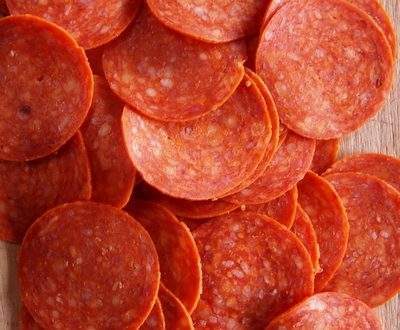
People generally know pepperoni as a type of sausage. This American variety of salami combines cured pork and beef. Pepperoni is usually soft, a little smoky, and also red in color.
It’s not Halal at all in Islam, because it is a form of meat that isn’t permitted to eat in Islam.
Probably the most favorite topping on American-style pizzas is a hot and spicy Italian dry sausage called pepperoni. Pepperoni is sold as solid sticks in meat shops or pre-sliced in supermarkets. Pizza pepperoni is about 1 inch wide, while sandwich versions are roughly twice that size. Some pizzerias use larger slices to prevent burning in hot ovens.
Italian immigrants brought their tradition of curing meats and drying them in natural casings. These fermented sausages could last 30 days at room temperature, providing essential food during long winters without fresh meat. The dry sausage generally known as pepperoni wasn’t a native Italian recipe, however, there are some native salamis as well as sausages that use very similar ingredients. The name is an Italian-American version of the original Italian language word for spicy peppers, pepperoni. The main meat utilized in pepperoni is pork, followed closely by beef.
Butchers mix these two types of meat and let them dry under refrigeration for a day before processing. They add spices such as black pepper, sugar, anise seed, salt, cayenne pepper, and paprika to the meat. Lots of people may imagine the red color and peppery bite of pepperoni comes from the cayenne pepper, but it’s the paprika that is primarily accountable for the color and also heat of most sausages.
Butchers mix the spices and meat, then feed the mixture into a casing machine. They slide a natural hog intestine or edible collagen casing onto an extruder and force the mixture inside. At intervals, they twist the stuffed casing and tie it with twine. They hang the completed chain to dry for 6–8 weeks until the pepperoni fully cures. Finally, they separate the individual links and either sell them to consumers or slice and pack them for restaurants.